Scheduler

Urology Surgery Scheduler

Thursday, December 21, 2006

Some Urologic Problems that Come from Obesity

1: Impotence: Obesity causes impotence via a variety of mechanisms, such as hormonal imbalances, lipid/cholesterol problems, vascular disease, hypertension, and the metabolic syndrome. Treating the obesity often improves the erectile function.
2: Male Infertility: Obese men often have lower sperm counts than normal weight men and the sperm from the over-weight men often does not function as well as sperm from a normal-weight man. Obese men have hormonal imbalances that are partially responsible for this phenomenon, but other coexistent factors, such as the metabolic syndrome, also contribute.
3: Kidney stones: Obese men and women, via their diets, have an increased urinary acid load to the tubules within the kidney, and the acidic environment facilitates the formation of kidney stones. Diets high in fat and animal protein, whether the protein comes from red meat, fish, or poultry, contribute most to the acid load. Treating stones in obese patients can be considerably more challenging than in thinner people as well.
4: Urinary Incontinence: Obese people have an increased risk of pelvic prolapse and stress urinary incontinence, the incontinence that comes from coughing, sneezing, and laughing. In addition, treatment of the incontinence is made more complicated due to the obesity.

Wednesday, December 20, 2006

Which hormones are important for male infertility?

A man's sperm production is controlled via a complex interplay of hormones in the brain and the testicles.

The control starts in the brain:
The hypothalamus (under the brain) release GNRH, a substance that promotes the pituitary gland to release 2 important hormones, FSH and LH.
FSH travels in the blood to the testicles where it tells certain cells, sertoli cells, to make sperm. When enough sperm is produced, the testicular cells produce inhibin, a hormone that travels in the blood and tells the pituitary gland to stop production and secretion of FSH.
        
LH also comes from the pituitary and travels to the testicles, where it signals to different cells, the Leydig cells to make testosterone.  Testosterone is the male hormone but is not active reproductively until it is converted to dihydrotestosterone via an enzyme, 5-alpha-reductase.  Dihydrotestosterone stimulates male reproductive tract growth and function.  Testosterone and dihydrotestosterone themselves inhibit pituitary production and secretion of LH enough testosterone is made.
 
Prolactin is an pituitary hormone that in men is not directly involved with reproduction.  However, certain medical conditions can cause prolactin to increase, such as pituitary tumors, which in turn causes decreased production of FSH and LH by a variety of mechanisms.            
 
Estrogen, usually thought of as a female hormone, is present in men as well and is called estradiol.  Estradiol levels are typically low, but may be elevated in certain conditions, such as obesity.  Testosterone is converted to estradiol by an enzyme called aromatase.  Aromatase is present in fat cells.
 
By looking at the levels of the various reproductive hormones, especially when analyzed in relation to a comrehensive history and physical examination, we can get a very good sense of a man's reproductive status as well as his prognosis for natural, biological fatherhood.  In addition, there are hormonal conditions that can be treated with medical hormonal manipulation, often resulting in the patience's return to natural fertility.  In addition, a compehensive endocrine assessment wil also detect potentially life-threatening medical conditions that are present in 2% of male fertility patients.

Friday, December 15, 2006

When would my husband need an epididymal sperm aspiration as opposed to a testicular sperm extraction?

The epididymal sperm aspiration, ESA, is a useful technique to retrieve sperm from men with obstructions and the sperm can be used for assisted reproduction (ART). Sperm retrieved in this manner is most commonly used in conjunction with IVF, as opposed to IUI, or artificial insemination. This is because standard IVF uses as few as 10,000 sperm and ICSI uses only 1 sperm, compared to 1 million, at least, that are required for IUI. Therefore, a couple can have multiple IVF attempts with 1 ESA, but only 1 IUI attempt.

The testicular sperm extraction (TESE) is a terrific technique to retrieve sperm from men that have either a sperm duct obstruction disorder or a sperm production failure disorder. The TESE enables a urologist skilled in the procedure to locate tiny pockets of sperm production with as little as 1-2 sperm. This small number of sperm can then be used for IVF or ICSI. I recently did such a procedure in which I--and the embryologist--found 9 sperm (Normal is millions!). After ICSI, the woman is pregnant with twins.

The most important determination of ESA vs TESE is the man's diagnosis as well as the preference of the embyologist and reproductive specialist. In this area, most embryologists prefer epididymal sperm, but can work easily with sperm retrived with the TESE.

Dr S.

Thursday, December 14, 2006

Circumcision and AIDS

I'm glad these important issues are making it to the mainstream media. See link from NYTimes.

Dr S.

Tuesday, December 12, 2006

UTI Question: Why is my urine culture positive, but I have no symptoms.

The urine culture is the diagnostic test of choice to accurately diagnose a UTI (urinary tract infection). Often, a female patient will be told she has a positive urine culture, even if she has no symptoms suggestive of a UTI, such as burning with urination (dysuria), frequency, urgency, or voiding in small amounts. This condition has a name and is called asymptomatic bacteriuria.

Asymptomatic bacteriuria is common in elderly patients, most commonly women, and occurs in greater than 80% of people in nursing homes. Young women also can have asymptomatic bacteriuria. Whether or not the bacteria should be treated with an antibiotic depends on a variety of factors.

In general, the first question that should be asked when a young woman has bacteria in the urine is how the specimen was collected. Urine specimen collection in woman can be somewhat problematic due to contamination of the specimen as it comes out of the urethra and traverses across the vaginal and labial tissue. For this reason, women are instructed to give a clean catch, midstream collection.

There are certian instances in which a young woman will have multiple, positive clean catch midstream urine cultures, yet have no UTI symptoms. In this case, rather than simply give multiple course of antibiotics, it is best to take a sample of urine directly from the bladder, painlessly, with a tiny catheter. If the culture by this method is negative, then the other cultures were most likely contaminated and no treatment is necessary. If, however, the catheterized sample is positive, evaluation for the source of the bacteria is indicated.

Dr S.

Accurate semen analysis available in Suffolk County

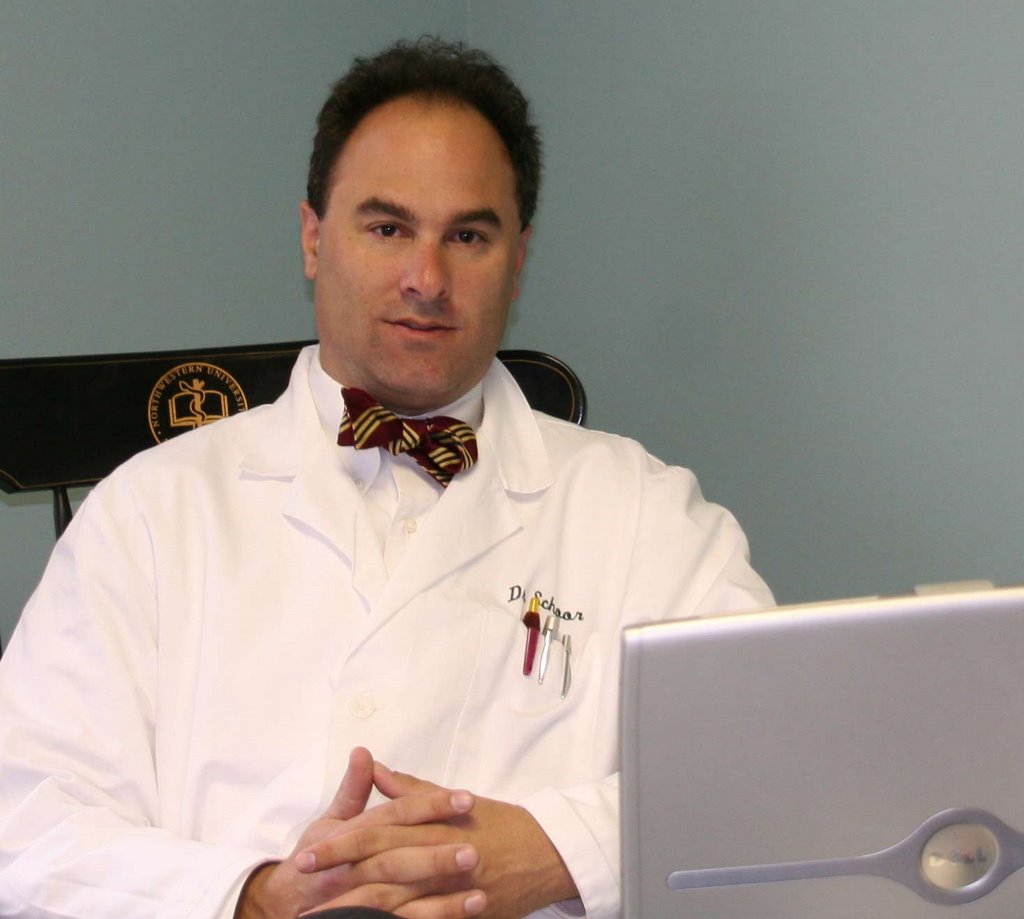
Semen analysis, which includes sperm counts, is now available in Long Island's Suffolk County. Dr Schoor is the only urologist/male infertility specialist with an on-site male infertility lab for semen analysis.

The semen analysis is typically the first test of a man’s fertility potential. The analysis usually includes multiple parameters, however the most important semen values are the ejaculate volume, sperm concentration (count), and sperm motility. Many physicians also place emphasis on the sperm morphology, or shape, though whether this is an important value, in and of itself, has not been determined. The most important analysis value that best measures a man’s fertility potential is the total motile sperm count, which should exceed 20 million sperm. A normal semen analysis does not rule out the presence of an adverse male factor.

Dr Schoor’s office does semen analysis 6 days per week, by appointment only. Please call 631-326-6035 to schedule.

Hours: Monday to Friday 8-6PM, other early AM and evening hours may be arranged.
Saturday hours can be arranged, call 631-326-6035.

Collection: Specimens are collected via masturbation only. For convenience, specimens may be collected at the office or at your home. If collecting at home, please get your sample to the office in 1 hour. Please observe 2-5 days abstinence prior to collecting.

Cups: Special specimen collection cups may be obtained at Dr Schoor’s office or your doctor’s office. Call 631-326-6035.

Results: Sample’s are analyzed immediately and you can call for the results the same day. In addition, Dr Schoor will fax the results to your doctor. Results are reported using standard WHO criteria.

Disclaimer: Semen analysis is a highly variable test from specimen to specimen and from parameter to parameter. The results ordered should be taken with caution and additional testing obtained as indicated. In addition, a normal semen analysis does not rule-out the presence of a male factor.

To Schedule an appointment, contact Dr Schoor.


CLIA ID# 33D1052709

Monday, December 11, 2006

Congenital Bilateral Absence of the Vas Deferens

Azoospermia is the clinical term for the absence of sperm in the ejaculate. Azoospermia can be caused by disorders of sperm production within the testicle or disorders of sperm duct obstruction (blockage). The testicles produce sperm, but it is stored and transported in the epididymes and then the vas deferens. 1-2% of infertile men do not have a vas deferens on both sides, congenital bilateral absence of the vas deferens (CBAVD) and are thus obstructed. Men with CBAVD are azoospermic and infertile without advanced assisted reproductive technology.
CBAVD, in addition to a cause of male infertility, is also a manifestation of cystic fibrosis. Cystic fibrosis is an autosomal recessive genetic disorder of chloride transport and is more commonly associated with the ultimately fatal pulmonary disease. However, at least 50-80% of adult and otherwise healthy men with CBAVD will be found to have a gene defect in the CFTR region and will in-fact have a variant of cystic fibrosis.
Sperm production in the testicles is completely normal and unaffected in these men and with advanced sperm retrieval techniques and intracytosplasmic sperm injection (ICSI), they can have their own, biological children.
The DNA in the sperm of men with CBAVD will carry the CF mutation and the mutation may be passed on to their offspring after a successful ICSI. For this reason, their wives should be tested for CF mutations to ensure that they are not carriers as well.

Dr S.

Saturday, December 09, 2006

Ejaculatory Duct Obstruction (EDO)

Though an uncommon cause of male infertility, EDO is an important one to diagnose because it is so treatable. Affected men will present with infertility most commonly, though they can also come to the urologist with complaints of pain with ejaculation or blood in the ejaculate. After taking a history and physical examination, the urologist should obtain a semen analysis, which will be significant for a low sperm count, poor sperm motility, and low ejaculate volume. The semen will often have an acidic pH. Not all of the above findings are present in all cases.

When EDO is suspected, the confirmatory test, the transrectal sonogram, can be performed by the urologist in the office and will likely show dilation of the seminal vesicles or the ejaculatory duct. Occasionally prostatic cysts or calcifications will be seen that support the diagnosis. In difficult to diagnose cases, an MRI may be helpful.

Treatment consists of surgically unroofing the blocked ducts with a simple, effective, outpatient procedure, the TURED. After a successful TURED, the majority of men will show improvement in counts, motility, volume, or any combination of the above in the first few weeks after treatment. Therefore, patients are counseled to resume unprotected sex or ART treatments within 1-2 weeks post-TURED.

Dr S

Thursday, December 07, 2006

Low testosterone: A myriad of symptoms

A detailed history by an experienced physician can elicit cues that you are hypogonadal, or have low testosterone.
See article.

Dr S.

rich@drschoor.com

STD detection without the painful urethral swab!

A relatively new urine test is now available that can detect GC and Chlamydia in the urine via DNA amplification. It is called the BD ProbeTecTM (Quest Diagnostics) and it uses PCR (polymerase chain reaction) technology to detect GC and chlamydial DNA fragments in the urine of patients with suspected STD’s 12-14. Other venders produce similar PCR based tests that are highly sensitive and specific. Men are simple asked to void into a sterile collection cup, and the urine is transferred to the preservative containing transport tube with a pipette. No urethral swab is needed. Since epididymitis in young men is considered an STD and most commonly caused by chlamydial infection, the DNA urine probe has become a useful adjunct in the diagnosis and treatment of epididymitis.

Dr S.

Wednesday, December 06, 2006

Azoospermia: The zero sperm count.

Not all men have sperm in their ejaculates, a condition known as azoospermia. Azoospermia may be caused by blockages of the sperm transport ducts (OA) or from disorders of sperm production (NOA). It is important that the doctor distinguish OA from NOA since treatments differ for the 2 types of azoospermia. Clinical factors such as physical and exam and laboratory findings can help the doctor differentiate between OA and NOA in many cases of azoospermia, but sometimes a testicular biopsy is needed to aid in the diagnosis.

The testicular biopsy is a diagnostic procedure that involves surgically taking a small sample of testis tubules and performing a pathology evaluation on them. Tubules from men with OA will show copious amounts of sperm at all stages of development. In contrast, the pathology results in men with NOA will show a continuum of findings within the specimen that range from tubules devoid of sperm, to immature sperm that are arrested during their development, to low levels of sperm production.

Treatment for men with OA is relatively straightforward and involved either microsurgical reconstruction of the reproductive tract or a sperm retrieval followed by IVF. NOA is a more difficult condition to treat, and often involves a complex sperm retrieval in conjunction IVF=ICSI.

Dr S.

The semen analysis is often the first test that a man has as part if his infertility evaluation. Dr Schoor is the only urologist in Suffolk County NY with an in-office semen analysis lab.

The Vasectomy

The vasectomy is the most effective and the safest method for elective sterilzation. It is generally done in the office under local anesthetic and is painless; we don't even need to use a scalpel. The whole procedure takes 30 minutes.
If you are interested, feel free to call or check out www.thexyfactor.com.